
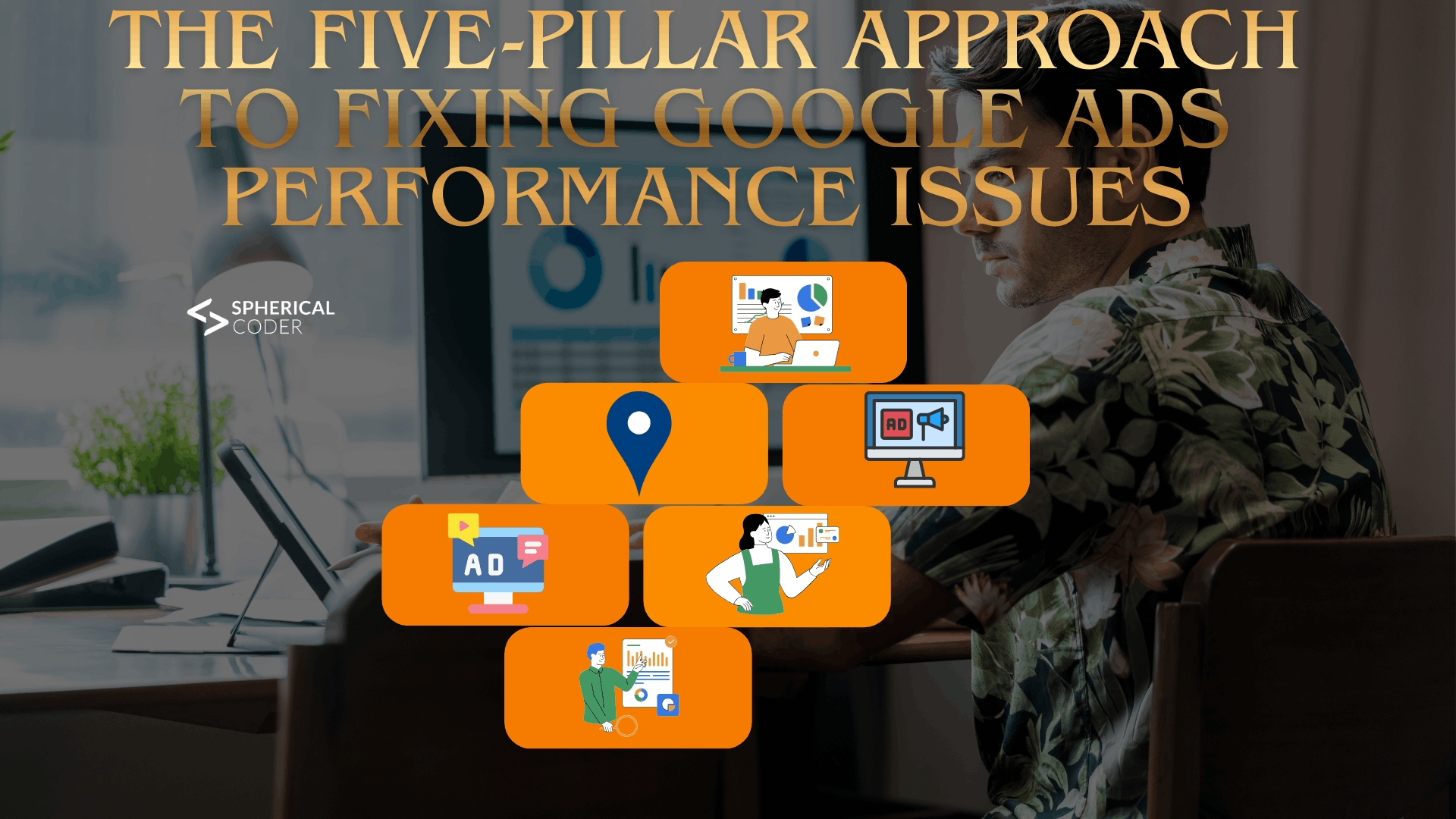
The Five-Pillar Approach to Fixing Google Ads Performance Issues
When a Google Ads campaign underperforms, relying only on quick setting changes isn’t enough. Marketers must focus on strategy, data, and AI-driven insights to improve performance.
The Five-Pillar Approach to Fixing Google Ads Performance Issues
When a Google Ads campaign fails to produce the desired results, many marketers' first reaction is to log into the account and begin altering campaign settings. However, in today's context, when automation and AI play an important part in campaign management, focusing solely on tactical changes is frequently insufficient. A campaign can be technically sound within the platform but fail to generate substantial business results. According to recent industry data, cost-per-lead grew in 13 of the 23 industries in 2025, indicating that underlying difficulties frequently lie beyond campaign settings. The real issue is often strategic misalignment, which occurs outside of the Google Ads interface.
A thorough audit should differentiate tactical errors from larger strategic issues. Understanding this distinction can help decide whether a campaign wastes money or generates real growth. To properly diagnose performance problems, it is useful to evaluate campaigns through five strategic pillars. These pillars help marketers identify where breakdowns occur and guide them toward practical solutions.
Business Objective Alignment
Many Google Ads issues arise before a campaign even launches. If corporate objectives are vague or not converted into measurable advertising goals, campaigns will struggle to produce significant outcomes. Teams frequently place too much emphasis on platform indicators like cost-per-click or Quality Score rather than measures that directly affect revenue and business growth.
Misalignment can also develop when marketing, sales, and leadership have distinct definitions of success, or when goals change regularly without updating the plan. In such cases, Google Ads merely optimizes based on the signals accessible in the account, even if those signals do not support actual business priorities.
For example, a corporation previously duplicated a successful Google Ads account from a different area. The first marketing aimed to encourage visitors to visit a physical location, whereas the current campaign emphasized e-commerce conversions. Although the campaign structure and keywords were technically appropriate, the strategy failed because clients in the new market preferred to visit the location before making a purchase. This demonstrates how critical it is for advertising strategies to be consistent with actual customer behavior.
Offer and Pricing Viability
Paid search campaigns cannot compensate for a weak or uncompetitive offer. If pricing is too high, the value proposition is unclear, or the product lacks differentiation, campaign performance will suffer regardless of how well the ads are optimized. Marketers should carefully consider whether their offer is competitive in the market and meets client expectations. In many industries, customers compare products across numerous platforms before making a purchasing choice. For example, one company launched direct-to-consumer advertisements for a product that cost more on its website than on Amazon. When users clicked the ad and went to the website, they quickly realized they could get the identical item for a lesser price elsewhere. Despite a great campaign structure and messaging, conversions remained low since the offer itself was uncompetitive.
Audience And Intent Fit
Another typical cause of poor marketing performance is a mismatch between the audience's intent and the campaign's conversion objectives. High traffic figures do not necessarily indicate that the campaign is attracting quality prospects. Many advertisers focus on high-volume keywords that attract consumers who are still exploring rather than ready to buy. Others anticipate rapid conversions from queries that are naturally related to the early phases of the purchasing process.
A fantastic example comes from a wedding venue promotion. Initially, the advertisements urged readers to "book now." However, most potential clients preferred to view the venue before making a final selection. Conversions improved considerably after modifying the call-to-action to "Book a Tour," indicating that the campaign better fit the audience's stage in the buying path. Understanding how customers make decisions helps ensure that advertising targets the correct intent and encourages actions that users are willing to take.
Landing Page Utility and Experience
Even the most enticing ads will fail if the landing page is not user-friendly. As Google automates more components of campaign optimization, the landing page becomes one of the most critical factors that advertisers can influence. Mobile usability is especially important because many consumers view advertisements on their cellphones.
Measurement Architecture
Accurate measurement is essential for effective campaign optimization. Google Ads relies heavily on conversion signals to guide automated bidding and targeting decisions. If the data provided to the platform is inaccurate or incomplete, the algorithm may optimize toward the wrong outcomes. Many advertisers track micro-conversions like page views or button clicks, which skew performance metrics but do not represent real business outcomes. Other concerns include inconsistencies in goals between Google Ads and CRM systems, missing conversion values, and delays in uploading offline conversion data.
In one situation, a corporation chose terms that appealed to both consumer and business audiences. Because offline conversions were never published, Google Ads was unable to determine which leads were truly worthwhile. As a result, the system focused on low-quality leads rather than qualified prospects. Ensuring precise monitoring and giving high-quality conversion signals allows the platform to optimize campaigns for real-world commercial results.
Turning Insights into Action
After identifying the source of performance issues, marketers must determine whether the problem is strategic or tactical before making campaign adjustments.
First, confirm that business objectives are clearly defined and aligned across teams. Next, evaluate the offer to ensure pricing, value proposition, and differentiation are competitive. It is also important to verify that keywords, targeting, and messaging match real customer intent and behavior.
Marketers should then improve the landing page experience by focusing on relevance, clarity, and speed. Finally, measurement systems must be reviewed to ensure the platform receives accurate conversion data. Only after these strategic elements are addressed should advertisers begin making technical optimizations within the Google Ads account.
Final Thought
Many campaign concerns in current PPC advertising appear to be tactical, but they are often the result of deeper strategy challenges. The five-pillar audit assists marketers in determining where these issues originate and the most effective method to address them.
Separating strategy from execution allows firms to make better marketing decisions, distribute funds more effectively, and build campaigns that generate real business growth rather than simply increasing platform analytics