LLM-Powered SEO: Understanding Jargon of LLMs And Its Practical Application for SEO
LLMs are transforming SEO by shifting focus from keywords to semantic relevance, voice search optimization, and personalized content experiences.
LLM-Powered SEO: Understanding Jargon of LLMs And Its Practical Application for SEO
Search engine optimization (SEO) is an essential aspect of modern-day digital content. With the increased use of AI tools, content generation has become easily accessible to everyone.
LLMs are advanced AI systems trained on vast datasets of text from the internet, books, articles, and other sources. Their ability to grasp semantic contexts and relationships between words makes them powerful tools for various applications, including SEO.
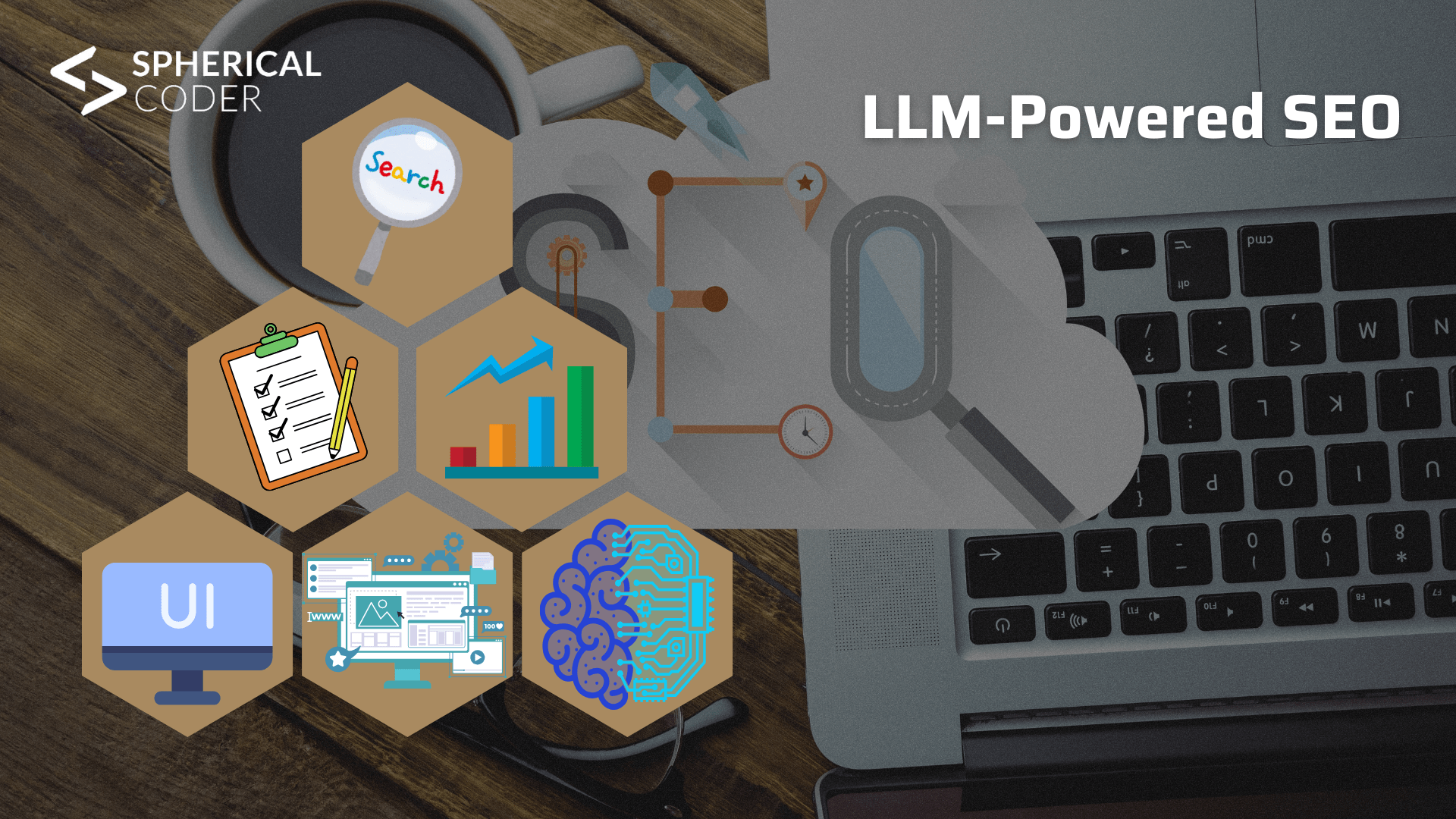
LLMs are revolutionizing the SEO landscape by shifting the focus from traditional keyword-centric strategies to more sophisticated, context-driven approaches. This includes:
- Optimizing for semantic relevance
- Voice search
- Personalized content recommendations
Introduction to LLMs for SEO
What is Text Embedding
Text embeddings are a subset of LLM embeddings, which are abstract high-dimensional vectors representing text that capture semantic contexts and relationships between words.
“Word” is referred to as a data token in LLM jargon, and each word is a token. In a more abstract sense, embeddings are numerical representations of those tokens that encode the relationships between any data tokens (units of data), which can be text, video frames, images, or sound recordings.
Understanding vector distances is important to grasp how LLMs work.
Different ways to measure how close vectors are:
- Euclidean distance
- Cosine similarity or distance
- Jaccard similarity
- Manhattan distance
What is L2 Normalization?
L2 normalization is a mathematical transformation applied to vectors to make them unit vectors with a length of 1.
In the context of text embeddings, this normalization helps us focus on the semantic similarity between texts (the direction of the vectors).
Most of the embedding models, like OpenAI’s ‘text-embedding-3-large’ or Google Vertex AI’s ‘text-embedding-preview-0409’ models, return pre-normalized embeddings, which means you don’t need to normalize.
But, for example, the BERT model ‘bert-base-uncased’ embeddings are not pre-normalized.
Practical Applications of LLMs for SEO
SEO professionals can harness the power of LLMs to elevate their strategies, ensuring content not only ranks well but also resonates with the intended audience
- Keyword research and expansion
Long-tail keywords, which are frequently less competitive but highly focused, provide substantial advantages in niche sectors, and LLMs are excellent at finding them.
By examining search patterns, user inquiries, and pertinent subjects, they can anticipate and find novel keyword prospects, guaranteeing that SEO experts can focus on particular keywords that appeal to their target audience.
- Content creation and optimization
By producing excellent, relevant language that properly matches target keywords while retaining a natural tone, LLMs have revolutionized the content development process. These models generate interesting and educational information by comprehending the context and nuances of language.
Additionally, in order to maintain websites' competitiveness in search engine rankings, LLMs can regularly update and improve current content by pointing out places that lack depth or relevance and making recommendations for improvements.
- SERP analysis and competitor research
LLMs can assess the efficacy and content structure of top-ranking pages using SERP analysis. By comparing their performance with competitors, SEO experts are able to find openings and weaknesses in their methods.
SEO professionals can create content strategies that target particular audiences and niches by utilizing LLMs, increasing the possibility of higher search ranks.
- Enhancing user experience through personalization
By tailoring content recommendations based on user behaviour and preferences, LLMs greatly enhance the user experience.
LLMs can provide more accurate and pertinent content, increasing engagement and lowering bounce rates, by comprehending the context and nuances of user inquiries.
By ensuring that consumers locate the information they require more quickly, this tailored strategy improves user satisfaction and retention.
- Technical SEO and website audits
Keyword placement, meta descriptions, and structured data markup, LLMs are essential to technical SEO. By optimizing content for technical SEO aspects, these models guarantee improved visibility in search engine results pages (SERPs).
LLMs may also help with thorough website audits, finding technical problems that could impact search rankings, and offering practical solutions.
While overreliance on LLMs can be a pitfall, as these models do not possess a true understanding. As the models do not have access to real-time data, the accuracy of generated content cannot be verified.
Thus, human expertise is indispensable for fact-checking and providing nuanced insights that AI cannot offer.
LLMs can assist in generating initial drafts and optimizing content, but the final review and editing should always involve human oversight to ensure accuracy, relevance, and contextual appropriateness.
Adoption of SEO for LLMs and AI search
"LLM SEO" isn’t a replacement for traditional search engine optimization (SEO). It’s an adaptation. For marketers, content strategists, and product teams, this shift brings both risk and opportunity.
AI-first interfaces like ChatGPT and Google’s AI Overviews now answer questions before users ever click a link (if at all). Large language models (LLMs) have become a new layer in the discovery process, reshaping how, where, and when content is seen.
This shift is changing how visibility works. It’s still early, and nobody has all the answers. But one pattern we're noticing is that LLMs tend to favor content that explains things clearly, deeply, and with structure.