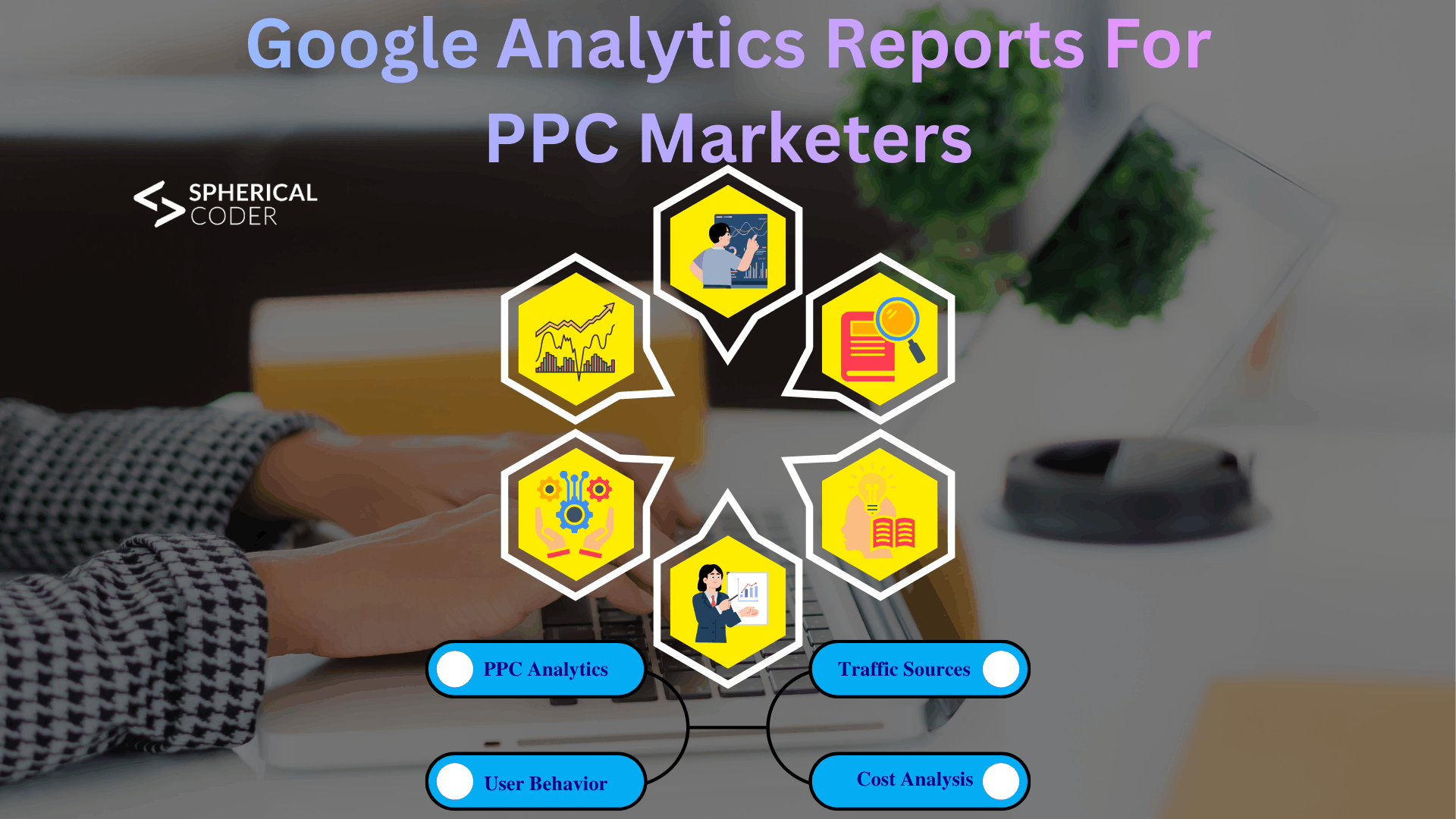
Google Analytics Reports For PPC Marketers
Google Analytics helps you track website and app data to understand users, monitor traffic, and gain insights that improve your business performance.
Google Analytics Reports For PPC Marketers
Google Analytics collects data from your websites and apps to create reports that provide insights into your business. You can use reports to monitor traffic, investigate data, and understand your users and their activity. Once Analytics starts to receive data, the data appears in the Realtime report and then in your other reports shortly after. Some of the data in your reports is collected from your websites and apps once you set up Google Analytics, while other data requires some additional setup.
As a business owner or marketer, understanding your website’s performance is absolutely crucial for making informed, data-driven decisions that drive real business growth. That’s where Google Analytics reports come in—they’re invaluable tools that give you a wealth of insights into your traffic, user behavior, and so much more.
1. Audiences Report
Audience report allows you to learn about the size of the audience, its impact on your business metrics, and the behaviour of users in the audience while users are entering audiences in real time. The reports are updated once a day overnight and are not rendered in real time.
With a more useful twist, the Audiences report in GA4 takes the role of interest-based reports, which were once used by many marketers. This report is based on actual user activity rather than implied purpose. The performance of both custom and predefined audiences across important engagement conversion metrics is displayed in this report. Analyzing audiences connected to significant across- rather than just general demographic characteristics is valuable for PPC marketers.
2. Site Search Report
Site search reports in Google Analytics are a great way to understand how people discover content on your website and what they’re looking for when they can’t find it. This is particularly relevant if you have a big, complex website that requires a good internal search solution to help users find what they need.
Each site search report can be used for various purposes. For instance, the No Search Result Keywords report aids you in discovering the query keywords that return no product results on your site. Showing no results for a query leads to a bad end-user experience and usually causes your end-users to leave the site, as no results are shown for the keywords they are searching. Providing insights for such keywords can help site search optimizers optimize (by adding synonyms, rules, etc.), resulting in pages for such queries, and can considerably improve the end-user experience.
3. Referrals Report
The Referrals report provides basic traffic on conversion metrics as they related to websites which link to yours and send you traffic. The Acquisition Referrals report displays a complete list of other domains which have sent your website traffic in during the selected time period.
Referral traffic in Google Analytics is a recommendation from one site to another. Google Analytics helps you to view these referrals so that you can better understand how your customers are finding you. Knowing the external sources that push your business forward can help you form lucrative partnerships, improve your marketing.
The key features of this report can identify third party sites sending high-quality traffic, distinguishing between low-intent and high-intent referral sources, and building placement based audiences for Display or Demand Gen testing. Testing Display placements based on proven referral sources can be a cost-efficient way to expand reach without sacrificing traffic quality.
4. Top Conversion Paths Report
Top Conversion Paths report helps you understand how different channels work together to achieve conversions. It breaks down the entire journey, from channel groupings to source/mediums. And, with the option to add a secondary dimension, the Top Conversion Paths report offers pretty much everything you need to know about how (and why) users are converting.
The Top Conversion Path Report is a multi-channel marketing attribution report through Google Analytics. It shows each conversion path the buyer takes, showcasing the touchpoints of each journey that leads to each conversion.
In today’s economy, this is more important than ever. This Google Analytics report helps analyze and interpret TOFU behavior. If you’re running any type of campaign beyond Search, this report is absolutely necessary. Campaigns like YouTube and Display and other paid channels like social media (Meta, Instagram, TikTok, etc.) naturally have different goals and objectives.
5. Conversion Events Report
The Conversion events report contains the columns you need to upload conversions, along with the IDs you need to attribute the conversions to items or events like keywords, clicks, and visits.
Most PPC accounts optimize toward a single primary conversion. That makes sense for bidding, but it rarely tells the full story of how paid traffic actually contributes to revenue. For PPC decision-making, this report aids in answering questions that Google Ads alone cannot, like which actions consistently happening before purchasing or lead submission, whether certain campaign driving strong intent, and how different paid channels influencing early stage engagement versus final conversion.
This becomes especially important when evaluating Display, YouTube, Demand Gen, or paid social campaigns. GA4 does not provide a standalone “conversion-only” filter inside the Events report, so accuracy starts with proper event configuration. Another practical use of this report is diagnosing drop-off points. If a campaign drives high volumes of early conversion events but struggles to generate final conversions, the issue may lie in landing page experience, form friction, or follow-up timing rather than targeting or bidding