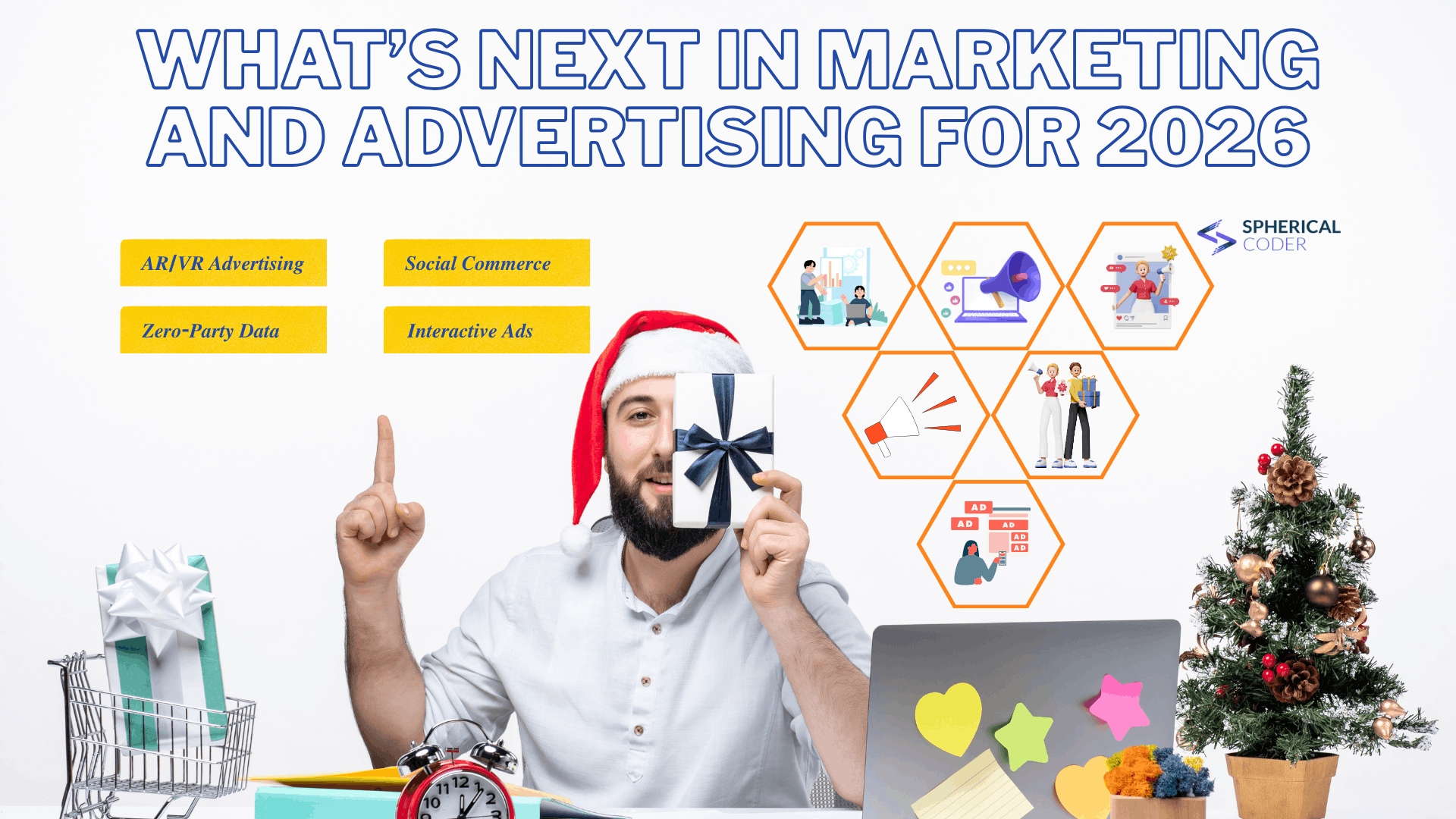
What’s Next in Marketing and Advertising for 2026
In 2026, marketing evolves with AI, personalization, automation, immersive experiences, and privacy-first strategies shaping brand–consumer connections.
What’s Next in Marketing and Advertising for 2026
In 2026, intelligence, customization, automation, and accountability will be key components of marketing and advertising. The industry is evolving beyond conventional digital strategies into a time where immersive experiences, AI, and privacy-first data methods influence how companies interact with consumers. Technology titans like Google, Meta, Amazon, and OpenAI are driving this change, but how well companies and agencies use these innovations strategically will determine their level of success in 2026.
AI-Powered Everything
Artificial intelligence is becoming the foundation of contemporary marketing operations, not only a supplementary tool. Media purchasing, audience segmentation, creative production, predictive analytics, and performance forecasts are all influenced by AI in 2026. Machine learning algorithms that examine millions of behavioral signals are used to optimize campaigns in real time. However, the competitive edge comes from intelligently utilizing AI rather than just employing it. Campaigns that blend AI automation and human intelligence are more relevant and emotionally impactful for brands than those that only use automated techniques.
Hyper-Personalization at Scale
Nowadays, customers anticipate tailored experiences at all points of contact. It is difficult for generic messaging to attract attention. Hyper-personalization in 2026 is more than just adding a first name to an email. AI-powered chat conversations, personalized product suggestions, dynamic website content, and contextual ad creatives that adapt to user behavior are all part of it. First-party data strategies are essential to this change as privacy laws continue to influence how companies gather and utilize data. Businesses create more enduring, solid client connections by investing in clean data infrastructure and open consent procedures.
The Rise of AI-Driven Search and Discovery
Search is changing into generative and conversational experiences. Users increasingly rely on voice-driven interactions and AI-generated summaries rather than clicking through several links. This adjustment alters the way that brands think about visibility. For AI-driven search results to show up, content has to be authoritative, contextually rich, and organized. By concentrating on subject authority, entity-based optimization, and trust signals instead of just keyword density, marketers are adjusting.
Creative Automation Meets Human Storytelling
Storytelling is still a human skill, even though AI systems can produce text, images, and even video. In 2026, AI will be used by creative teams to speed up testing and production, enabling them to try out more forms and variants. Immersive digital experiences, interactive content, and short-form video still account for the majority of engagement metrics. To ensure that brand voice and emotional connection are not sacrificed in the name of expediency, the most successful campaigns strike a balance between automation and authenticity.
Performance Marketing Becomes Smarter
Performance marketing is changing as platforms add more sophisticated automated options. Predictive targeting, algorithm-driven optimization, and intelligent bidding systems are commonplace. Marketers prioritize creative testing, strategic input, and conversion optimization above manual tweaks. With the integration of cross-channel attribution models, measurement frameworks are getting more comprehensive and offer a more comprehensive understanding of the whole customer experience.
Commerce and Content Integration
The distinction between business and content is becoming increasingly hazy. Live commerce events are becoming more popular, social media platforms are incorporating more purchasing capabilities, and content marketing is directly driving sales. Influencer partnerships develop into long-term alliances with a quantifiable return on investment. Brands place a high value on smooth purchasing processes that lower barriers to purchase, making convenience a key differentiator.
The Expansion of Immersive Experiences
In 2026, interactive brand experiences, virtual try-ons, and augmented reality will all continue to grow in popularity. Although not all brands need immersive technology, companies in the travel, real estate, retail, and lifestyle industries are using it more to increase engagement. These encounters make marketing more memorable and engaging by bridging the gap between online browsing and in-person contact.
Final Thoughts
The three pillars of 2026 marketing and advertising are impact, integration, and intelligence. AI boosts productivity, connections are strengthened via customization, and brand equity is reinforced through trust. However, success is not assured by technology alone. Brands that successfully integrate cutting-edge tools with strategic clarity, artistic authenticity, and quantifiable responsibility are the most successful. Adaptability and customer-centric thinking continue to be the real drivers of sustainable success as the market changes.