To navigate AI Turbulence, CMOs can apply the Flywheel Model
“CMOs are navigating rapid change by leveraging research, AI, and digital trends to boost ROI, drive innovation, and build long-term business advantage.”
To navigate AI Turbulence, CMOs can apply the Flywheel Model
With the evolving technology, chief marketing officers are facing exceptional levels of change and uncertainty.
Nearly two-thirds of CMOs in Fortune 500 companies overcame these extraordinary challenges of navigating change and uncertainty. This resulted in 65% of CMOs who exited their roles after an average tenure of 4.3 years “being promoted to more senior roles” or “making lateral moves to other attractive CMO positions.”
CMOs should consider analysing marketing research and applying digital trends to -
- Discovering consumer insights for effective marketing in a dynamic market
- Unlocking exceptional marketing results and increasing return on investment (ROI) with the power of AI
- Reaching customers across search, video, social, and shopping platforms
- Driving progress in marketing by championing the latest innovations and ideas
- Data transformation into a tool for building a lasting business advantage
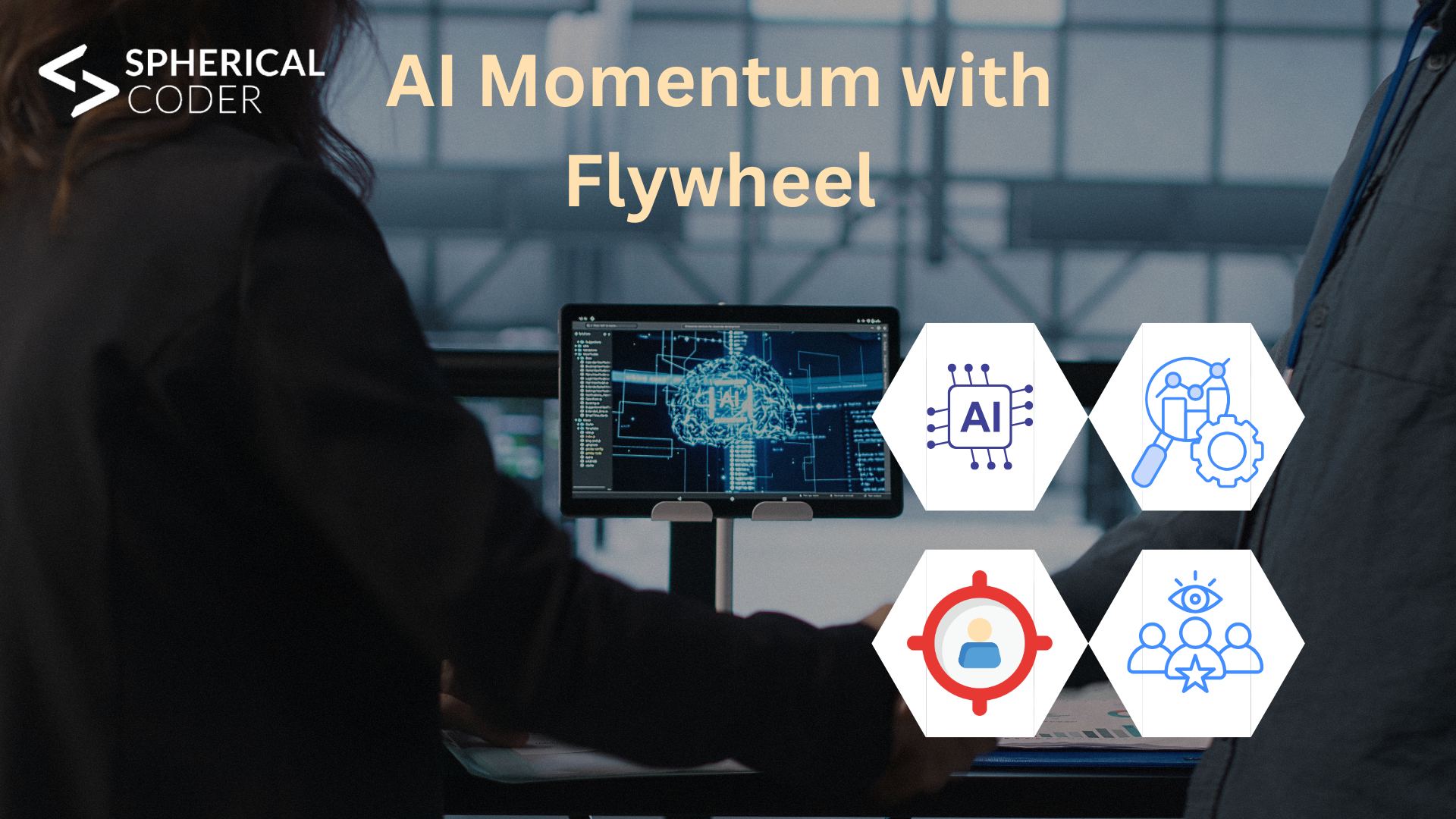
Adding AI to the Traditional Flywheel
Moving deeper into the AI revolution, marketing strategies are evolving to include systems that are continuous, efficient, and customer-centric. AI Marketing Flywheel is gaining ground as a dynamic approach for fueling ongoing growth, capturing audience interest, and deepening customer relationships.
Stages of AI marketing Flywheel
- Attract- drawing in potential customers through personalization
- Engage – keeping customers invested with real-time interaction
- Delight- surpassing expectations through predictive analytics
- Measure and refine- learning and iterating for continuous improvement
Transition from the traditional marketing funnel to the AI marketing flywheel is emblematic of the broader shift toward customer-centric strategies.
For companies looking to implement the AI marketing Flywheel, the key lies in identifying the right data points, using AI tools for deriving actionable insights, and constantly iterating on the customer experience.
Businesses can transform customers from passive consumers to active advocates with a well-oiled AI marketing flywheel, keeping the momentum alive for growth and innovation.
Pillar 1: Measurement and Insights
Implementing modern, AI-powered measurement tools are important for accurate data and insights while respecting privacy.
Aligning key performance indicators (KPIs) with business performance metrics such as profit and ROI.
An AI foundation of well-defined KPIs, historical data, and first-party data leads to outcome-based planning, where AI predicts and improves campaign performance and optimizing budget allocation.
Measurement and insights can help transform their data into a tool for building a lasting business advantage.
Pillar 2: Media and Personalization
It includes delivering the right ad to the right person at the right time.
Scaling successful AI-powered campaigns leads to budget shifting for maximum ROI and flexibility.
AI is identifying engaged, high-value audiences across channels and revealing valuable consumer behaviour insights.
Media and personalization can help to reach customers across search, video, social, and shopping platforms.
Pillar 3: Creativity and Content
Brainstorming impactful ideas aids in developing innovative content.
Creativity and content can help unlock exceptional marketing results and increase ROI.
Fourth Pillar: People and Process
It emphasizes collaboration, extending to the C-suite.
Sharing prioritized AI opportunities is important, and transformative leaders are reconstructing organizations to fully leverage the AI engine.
People and process can help to drive progress in marketing by championing the latest innovations and ideas.
Analyzing Market Research and Applying Audience Research
CMOs noticed that “The AI-powered Marketing Engine” framework aids in overcoming four of the five obstacles.
An AI-powered marketing engine helps analysts discover consumer insights for effective marketing in a dynamic market.
In any organization, investments in data create two different types of work, i.e. reporting squirrel work and analysis ninja work, both important, and one of them directly contributes to improving the company’s financial performance.
Further, reporting on squirrels emphasizes data production, spending time creating reports for various stakeholders.
Data extraction, query writing, fulfilling ad-hoc requests, scheduling data outputs, and coordinating with IT teams are some of the key responsibilities for data acquisition.
Audience Research
Audience research emphasizes individuals delving into the needs, preferences, behaviours, and language of the target audience. It includes interviews, surveys, focus groups, social media analysis, and the use of existing customer data, such as customer relationship management (CRM) and support logs.
Economist Richard Baldwin said at the 2023 World Economic Forum’s Growth Summit: “AI won’t take your job. It’s somebody using AI that will”
Understanding that a Fortune 500 company is expected to successfully navigate the complexities of the AI era and achieve sustainable growth.
Embracing AI-powered tools and frameworks, and prioritizing a deep understanding of the audience through dedicated research efforts.
CMOs are transforming data into actionable insights, optimizing marketing strategies, and ultimately building a lasting competitive advantage in an increasingly dynamic market.