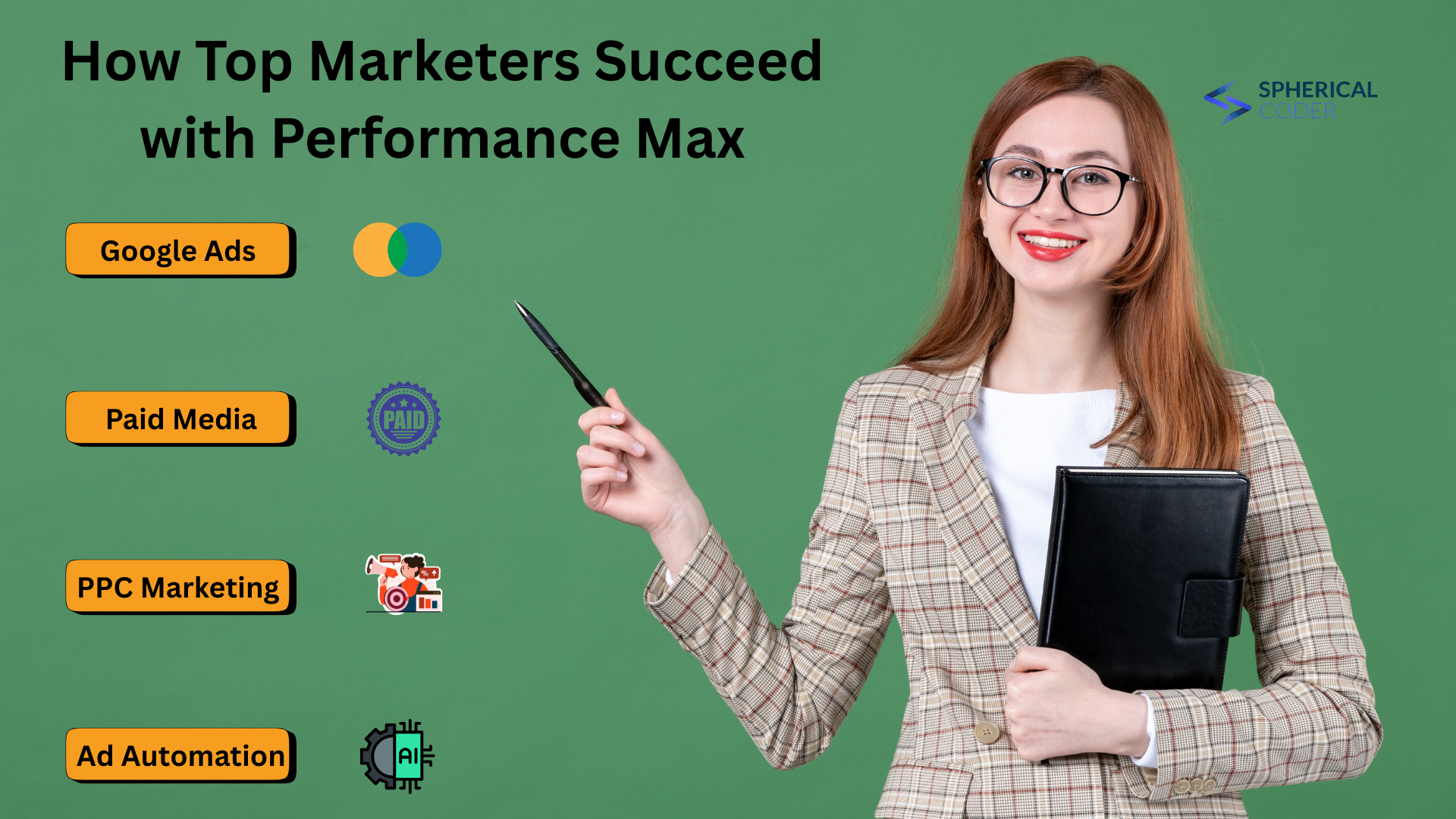
The Behaviors and Mindset of Marketers Who Win with Performance Max
Performance Max helps advertisers reach more converting customers by unifying Google Ads inventory across Search, YouTube, Display,Gmail, and Maps.
The Behaviors and Mindset of Marketers Who Win with Performance Max
Performance Max is a goal-based campaign type that enables performance advertisers to access all of their Google Ads inventory from a single campaign. It is designed to complement your keyword-based Search campaigns to help you find more converting customers across all of Google’s channels, such as YouTube, Display, Search, Discovery, Gmail, and Maps.
Performance Max uses Google AI across bidding, budget optimization, audiences, creatives, attribution, and more. They’re all empowered by your specific advertising objective, for example, if you have a CPA or ROAS target, and the creative assets, audience signals, and optional data feeds you provide.
Performance Max is different enough from Google Ads campaigns requiring a different approach even if the underlying search behaviour and marketing principles are same.
It is typically not the first campaign to launch in any account. Typically starting with Search and/or Shopping before layering on PMax when it makes sense, e.g., testing and scaling.
A strong mindset for modern PPC begins with knowledge and education.
Performance Max is driven by algorithms, not inputs or controls. There is a certain degree of surrendering to the system that goes with it, and trying to exert control when there’s none to claim would only end up with a large chunk of wasted spend.
Core Truth about Performance Max
- You don’t control targeting
- You don’t decide which headlines get paired with which creatives
- You don’t get full visibility into every query or placement
- Data, not content, is king
- That being said, reporting is getting better, but it can still be frustrating
Traits of PPC Managers who struggle with Performance Max
Usually PPC managers everyday who are set in their ways that all they can do is complain about some part of Google’s machine learning. While it is perfectly fine to stick with Search and Shopping. And its okay to bring a mindset of Performance Max and expecting results anyway.
Some behaviors show up most frequently, include-
- They require granular control over everything
Wanting to dictating exactly the system should operate is a red flag in managing PMax.
- They believe their experience is a guarantee of success
Not putting efforts to stay up to date on market and technological developments, which is typically old school marketers because of their tenure.
- They specialize in Google Ads account management and little else
Modern PPC demands basic level of skill across copywriting, landing page theory, conversion rate optimization, product feed management, market & audience research, and provide positioning.
- They don’t have the diamond hand needed to trust their strategy
People pushing back at the first sign of below average output tend to make changes which reset the learning period, delaying Google’s ability to start delivering good conversions.
- They take a “set it and forget it” approach to automation and machine learning
Exiting learning period in Performance Max is keeping an eye on early results and providing data inputs so that system learns what you want more/less of.
- They expect the system to magically understand what the client wants
Toughest part of modern PPC is persuading clients for providing accessibility to data that Google demand for understanding what success looks like on business side.
PPC Manager who wins with Performance Max
Algorithmic campaigns are not suitable for every account. Sometimes, it’s just better to stick to Search and Shopping. But wherever there is an opportunity to scale with PMax, there is a specific type of person you want in charge of the process.
- Marketers willing to hand over control of ad operations to systems able to focus on impactful areas where machines struggle to create differentiated output, which include creative, ad copy, landing pages, and their UX, strategy, data sourcing and interpretation, etc.
- A good PPC managers need to understand what you want is someone who is ready and willing to learn with every new project and iteration.
- Marketers focusing on building ecosystem of data inputs and learning, get better results with PMax as they give Google more information to base its decisions on. Someone who knows where to find those and how to convince clients that they’re mission-critical is worth their weight in gold.
- Another underrated trait is proactively setting expectations with clients and communicating with them throughout the campaign.
PPC-Adjacent Skills to Develop for Performance Max Success
- Understand marketing theory and the fundamentals that underpin all campaigns, not just in media or Google Ads.
- Understanding different automations in Google and their function
- Setting up online and offline conversion tracking impacting business results and not just platform metrics
- Understanding setting up clear goals for campaigns and clients
- Know all of Google’s different ad inventories and people interaction for adapting your approach to any channel or network.
Performance Max is the Start of the Future
By maintaining a balance between machine learning and human control, learn to work together on these algorithmic campaigns. Performance Max has significantly changed from when it was first released, and so has Google’s attitude.
New features in PMax, such as negative keywords and improved reports, aids in refining campaigns and providing advertisers more than enough.
Performance Max today is perfectly viable for virtually any type of business, which is far cry from its early usage case limiting to big-budget ecommerce and retail