
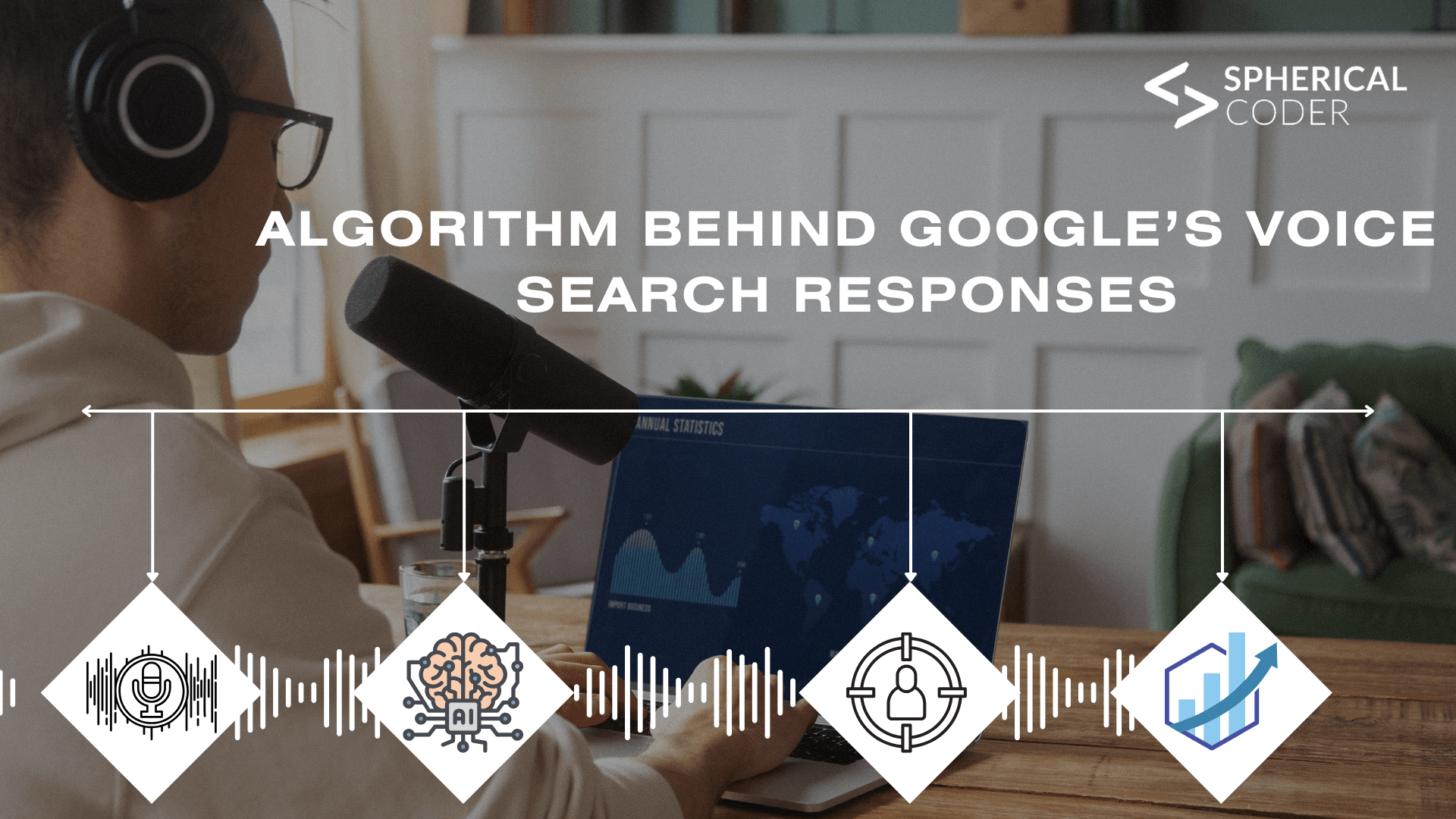
Algorithm Behind Google’s Voice Search Responses
Voice search is transforming how users find information. Learn how Google uses AI, NLP, and context awareness to deliver fast, accurate voice search results.
Algorithm Behind Google’s Voice Search Responses
Voice search has become a crucial component of how people use technology in the era of smartphones and smart speakers. Users are increasingly adopting gadgets like smartphones, tablets, smart speakers, and virtual assistants to ask their questions out loud rather than typing them into a search bar. Google, the world's most popular search engine, has created advanced systems to comprehend, process, and react to voice inquiries. Knowing the algorithm that powers Google's voice search results provides important insight into how contemporary search technology integrates machine learning, natural language processing, and context awareness to provide precise and quick results.
What Makes Voice Search Different?
Traditional text search is fundamentally different from voice search. Users frequently type brief keyword phrases like "best restaurants near me" or "weather Pune tomorrow." Spoken questions, on the other hand, are frequently more conversational, lengthier, and more like natural language. For instance, a voice search would be "Hey Google, which places in Pune have the best vegetarian thali near me right now?" but a typed search might be "restaurants Pune." Search algorithms face particular difficulties as a result of the transition from fragmented keywords to natural sentences. Google's voice search algorithm needs to comprehend the user's intent, correctly identify spoken words, and obtain the most pertinent information in a matter of milliseconds in order to overcome these challenges.
Speech Recognition: The First Step
Automatic Speech Recognition (ASR) is the first step in the voice search process. The spoken words of a user's query are transformed into digital audio signals. These signals are examined by Google's ASR system, which then generates a text transcript of the question. Making sense of various accents and pronunciations, removing background noise, and recognizing word boundaries are all part of this. Deep neural networks are used to increase the accuracy of Google's ASR models, which are trained on enormous volumes of speech data. The algorithm eventually picks up on the rhythms and patterns of natural speech in addition to specific words. This makes the transcription more accurate, especially in noisy settings or when people talk fast or carelessly.
Natural Language Understanding: Interpreting Intent
The next difficulty is figuring out the user's purpose after the spoken question has been converted to text. The algorithm needs to understand what the user is truly requesting, not just read the words. Natural Language Understanding (NLU) is useful in this situation. The structure and meaning of the transcribed text are examined by Google's NLU algorithms. To determine if a user is asking a question, looking for instructions, seeking definitions, or desiring a certain action, they take into account context, language, and semantics. For instance, even if "Show me pizza places near me" and "How do you make pizza at home?" include similar terms, the system needs to distinguish between the two.
Important elements in this level include machine learning models, such as transformers and attention-based architectures. Synonyms, purpose markers, and contextual relevance are just a few of the linguistic subtleties that these models assist Google in capturing. Not only processing the words is the aim, but comprehending their meaning is as well.
Contextual Awareness: Personalizing Responses
The utilization of contextual cues by Google's voice search algorithm is one of its main advantages. The user's location, search history, device kind, and even the time of day are all examples of context. For example, Google may use location and real-time data to show the most recent scores for a cricket match if someone asks, "What's the score?" while watching the sport.
A significant factor in many voice questions is location. Geographic context is necessary for queries like "best coffee shops" and "nearest pharmacy" to yield useful answers. With consent, Google's algorithm uses real-time location information to customize results.
The history of the session, or how the discussion has progressed, is another component of context. Instead of processing each query separately, the algorithm uses the prior query to modify the response if a user asks a follow-up question like "And how about vegetarian options?" right after a query about restaurants in the area.
Continuous Learning and Improvement
Google continuously learns from user interactions, so its voice search algorithm is never stagnant. The system utilizes user feedback, query refinement, and result selection to enhance subsequent responses. Continuous model training and reinforcement learning aid in improving speech recognition and intent interpretation over time. Privacy concerns are also crucial. Google gives consumers control over their data and privacy settings, enabling them to select what information is used, even as contextual personalization increases relevance.
Conclusion
Advanced technologies, including speech recognition, natural language comprehension, contextual customization, and intelligent ranking, have come together to form the algorithm that powers Google's voice search results. Google's technology offers a smooth and user-friendly experience by precisely transcribing spoken inquiries, deciphering intent, utilizing context, and providing pertinent responses in natural voice. Understanding how these algorithms function may help businesses improve their content and services for voice search, ensuring they stay visible and relevant in the future of search as speech interfaces grow more commonplace – from smartphones to smart speakers and linked devices.