Google AI Mode and the Future of Search Monetization: Ads, Prompts, and the Post-Keyword Era
Google AI Mode boosts search engagement, offering helpful AI-powered responses and driving higher usage in major markets like the U.S. and India.
Google AI Mode and the Future of Search Monetization: Ads, Prompts, and the Post-Keyword Era
Google AI Mode, which is now available to all U.S. users without a waitlist, represents a significant step towards how we engage with search.
AI in search is making it easier to ask Google anything and get a helpful response, with links to the web. This is the reason that AI overviews are one of the most successful launches in Search in the past decade. As people use AI Overviews, they’re happier with their results and search more often. In biggest markets like the U.S. and India, AI Overviews is driving over a 10% increase in usage of Google for the types of queries that show AI Overviews.
AI Mode is Google’s most powerful AI search, with more advanced reasoning and multimodality, and the ability to go deeper through follow-up questions and helpful links to the web.
Under the hood, AI Mode uses our query fan-out technique, breaking down your question into subtopics and issuing a multitude of queries simultaneously on your behalf. This enables Search to dive deeper into the web than a traditional search on Google, helping you discover even more of what the web has to offer and find incredible, hyper-relevant content that matches your question.
AI Mode is where we’ll first bring Gemini’s frontier capabilities, and it’s also a glimpse of what’s to come.
Further, powered by Gemini 2.5, this new interface is moving beyond AI Overviews by introducing a persistent, conversational assistant that blends AI-generated insights with traditional search results.
Rethinking Ads in Mode
The shift towards AI-assisted browsing brings another major challenge.
If users get what they need from the assistant itself, the need to visit websites diminishes, weakening the foundations of the cost-per-click (CPC) business model. Clicks would be more relevant because, unlike in the past, where a click was a user’s initial exploration of your offer, now they are better informed and further along in their research by the time they visit your site for the first time.
Search Monetization
Search monetization, or search engine monetization is a technique in which publishers and/or websites create content around specific keywords with the intention of making money from the traffic they generate.
Essentially, search monetization functions around the use of key terms. When someone types a keyword into a search engine, they will then be presented with links to websites through which content creators can generate income via this traffic.
Search feed monetization or search monetization is one of the ways website owners and publishers can monetize their websites. By using the right keywords, content, and strategies, websites can attract the right traffic to their sites. Once people start to visit your website, you can use several different ways to convert the traffic into potential customers, as well as monetize this traffic to earn income from your website.
Monetization Models: Why Subscriptions aren’t the Future
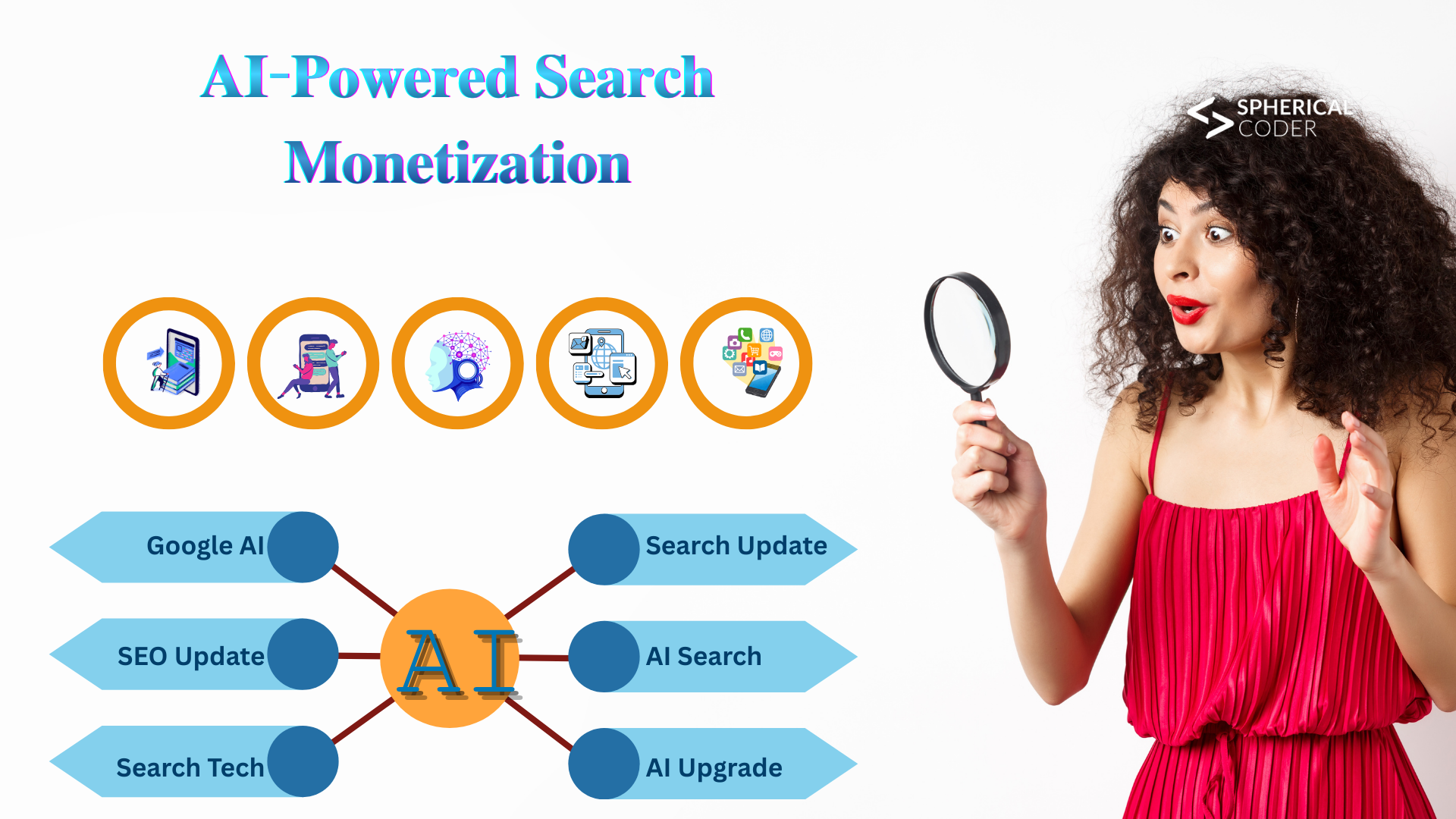
Monetizing AI-powered search
Startups like Neeva, led by Sridhar Ramaswamy (Former Google Ads Chief), are attempting to replace ads with subscriptions, but user adoption has fallen short.
Even OpenAI, with its paid ChatGPT Pro tier, sees a vast majority of users opting for free access.
Ads In AI Mode
To maximize the likelihood of your ads appearing in this environment, it’s advisable to utilize Google’s AI-centric tools, including AI Max in search campaigns, Performance Max, and Demand Gen.
AI is becoming an increasingly integral part of online marketing as more advertisers adopt “smart” options in platforms and use AI tools to help generate, manage, optimize, and report on campaigns.
As ads on Google AI Mode are in the experimental stage, there’s very little documentation around it.
Unlike regular keyword targeting, where the search term simply needs to closely match what your keywords are for an ad to show, ads on AI Mode require much more cohesion for the searcher. Not only does your keyword need to be relevant to the query, but your ad content and landing pages also need to be relevant to the answers provided by AI Mode as well (this is also how ads work in AI Overviews)
Additionally, just like AI Overviews ads, Google is requiring advertisers to opt into AI-powered targeting solutions like broad match, AI Max for Search, or keywordless targeting that accompanies Dynamic Search Ads or Performance Max.
Conclusion
Better on AI-Powered Ad Innovation
In the near future, context and AI-powered interactions driven by memory, intent, and discourse would be more important than search and keywords when it comes to assisting customers at the appropriate moment.
Early indicators are encouraging: When advertisements are helpful rather than intrusive, users react more favorably.
Microsoft’s Copilot experience demonstrates that engagement and conversions increase when generative algorithms provide fewer but more targeted adverts.
Google has the chance to apply those lessons by including timing and utility into its AI-native monetization engine.
The model that succeeds is the one in which the helper can produce results and add value without disrupting the flow.
Even though there would be fewer impressions for each customer trip, I am confident that Google and other ad platforms will figure out how to profitably monetize these advertising opportunities.
The principles of advertising are still relevant, but strategies would need to be altered quickly. The new starting point is prompts rather than keywords, which alters the game