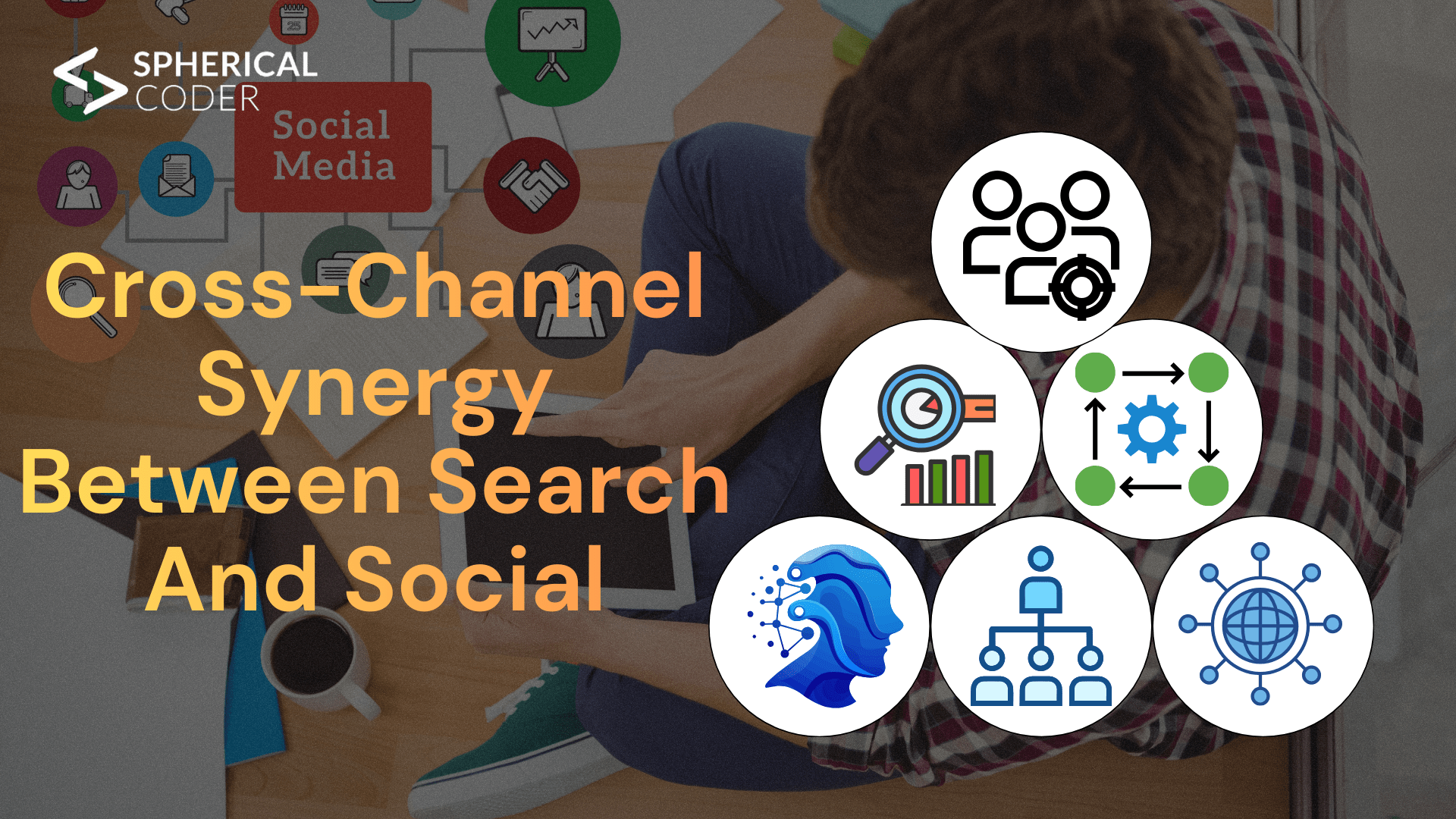
Cross-Channel Synergy Between Search And Social
Aligning SEO and social media boosts visibility, authority, and cross-channel impact.
Cross-Channel Synergy Between Search And Social
Intertwined between your search and social strategies, work together like a well-oiled machine and enable multiplying search visibility. Unfortunately, SEO and social media teams more often than not operate in silos, rarely engaging with each other and never working in tandem.
Currently, SEO emphasizing on optimizing for the latest Google algorithm update while social media teams work earnestly to respond to brand mentions. SEO and social go hand-in-hand, building unified systems in current marketing, enabling maximized cross-channel amplification. This helps businesses rank higher, improve brand recognition, and build a consistent story across every single touchpoint.
Audience engagement on social platforms influences how search engines interpret trust, authority, and relevance.
Search and Social Belong Together
Social and search work in unison to compound your marketing and SEO efforts. This aids in improving customer experiences from first search to reading reviews, ultimately helping in decision making phase of the sales journey.
1. Social creates the spark of discovery
As per GWI consumer research, nearly half GenZ population turns to social media first while conducting product research. Many of those users later turn to search to validate and compare what they discovered on social media.
Social media content must not just be entertaining or chasing the latest viral trend, but must answer questions that your customers are asking. Knowing that social sentiment is often the early determinant of increasing search demand, its is important for CMOs, SEOs, and social marketers alike to watch for engagement spikes around an emerging topic, creating high-quality content in order to turn buzz into business.
2. Search Anchors and Sustains the Momentum
Social engagement and search visibility are together creating the right balance of speed and longevity. Social post receiving thousands of comments, while optimized landing page build same topic that can rank and drive sales for years to come.
If, for example, Gong, which generates roughly 2.2 million visits a month from organic traffic, according to SimilarWeb. They invite readers to follow their LinkedIn, and their efforts are paying off, rather than asking for navigating to a demo or related blog post. Gong has 315,000 followers on LinkedIn, and its competitor, Chorus, meanwhile, has about a third of the followers. The type of momentum is what Google favors and pays attention to, making them more likely to be highlighted in the SERPs.
3. Shared Data Creates Precision
Integrating SEO and social data sets helps marketing leaders in identifying what is working and what isn’t, showcasing what content is delivering return on investment and which should be repurposed. It includes identification of patterns like posts earning high engagement with low search volume or blog posts earning clicks but failing to be shared on social.
How To Engineer Cross-Channel Synergy
- Share objectives
- Plan content around signals
- Implement a content relay system
- Pair AI with human expertise
- Align leadership and cultural change
- Embrace an ecosystem mentality
To make sure that everyone is working toward the same objective, intentionally combine the SEO and social teams and align on KPIs. Establishing shared objectives, like intent coverage, brand visibility, and more, fosters teamwork and maximizing corporate success.
Social media marketers are using social listening to detect emotional signals, and SEOs are measuring search data to discern what users would look for next. And merging the two together, allowing content marketers to create click-worthy and relevant content, meeting audiences exactly where interest turns into action.
Cross-channel listening opens the door to conversions that content marketers often aren’t involved in.
Top-performing brands are treating search and social as relay partners, working together for the greater good of the organization and embracing the team player ideology. The content relay model works when implemented correctly. Every piece of content fuels another, creating a loop of engagement, validation, and authority that compounds across platforms and content’s lifetime.
Pairing AI with human expertise helps in powering smart business decisions. In the case of social media and search, AI-powered tools are used to help analyze language consistency and detect sentiment shifts. Similarly, AI can also identify when your top-performing social post is driving branded search volume or when a keyword starts trending related to products or services in user-generated content.
Marketing leader creating environments where SEOs and social media team members understand why and how they’re working together. A good company culture that fosters collaboration is imperative for team building, employee retention, and business success.
Once marketing leaders align data, culture, and goals, your organization’s ecosystem begins to operate like a living, breathing organism. Social media speeds up search, and search informs social media, all of which increases your company’s lifetime. As a result, our company is better able to withstand Google’s ongoing algorithmic changes. The effects of a siloed strategy begin to change from stagnant to seamless.
Final Thought
Search and social are no longer divergent roles that never speak to one another. However, they’re an integral effort playing for the same team and can amplify one another to create something bigger and better than either could solo