Comprehensive Overview Of PPC Advertising Into New Market
Understand PPC advertising, where advertisers pay per click to drive targeted online traffic.
Comprehensive Overview Of PPC Advertising Into New Market
Pay-per-click (PPC) advertising is a digital marketing model where advertisers pay a fee each time their ad is clicked. This fundamental concept is important for understanding the world of online advertising.
Full-Funnel Media Planning Is Essential
A full-funnel market strategy enables you to reach the right audience with the right message at the right time, whether they are just discovering your brand or ready to buy.
Full-funnel marketing refers to crafting a strategy across all marketing channels and touchpoints in the customer journey. It encompasses all levels of the funnel. When we say “funnel”, it is referred to as the marketing funnel, that outline the most straightforward journey a customer might take in the path of purchase.
Upper-funnel marketing strategies build brand awareness. For instance, many TV commercials are designed to build awareness among audiences who may not have a need for the product yet. Mid-funnel marketing strategies typically focus on building consideration and standing out in your category. Lower-funnel marketing drives purchase among shoppers who show potential to buy.
The marketing funnel is a helpful framework for engaging audiences. At the same time, customer journeys and funnels aren’t interchangeable concepts. Funnels are linear, but customer journeys rarely move directly from awareness to consideration to purchase.
Have A Robust Measurement Strategy In Place
Measurement strategy matters due to its clarity, focus, consistency, and accountability.
The HEART framework measures user experience holistically and was created by Google’s UX researchers. The framework measures how well a product meets user needs beyond just usage numbers, capturing both emotional and practical aspects of the user experience.
Measuring product success requires a thoughtful, multi-layered approach that ties system health, product performance, business outcomes, and customer sentiment together. By mapping your strategy to a clear framework like Pirate Metrics or HEART, and by understanding the types of metrics you track, you can make better, data-informed decisions that drive product growth and delight users.
Research Market-Specific Nuances And Adapt
Understanding market nuances is a necessity. While a globally standardised brand strategy may seem efficient, the reality is that markets are shaped by distinct cultural, economic, and behavioural differences. Brands that fail to adapt to these nuances risk being overlooked, or worse, completely misunderstood. On the other hand, businesses that take the time to understand and integrate these subtleties into their positioning often achieve remarkable success.
Entrepreneurs and brand managers who invest time and resources to thoroughly understand these nuances gain a tremendous competitive advantage. Research consistently demonstrates that localised strategies generate significantly higher engagement rates, brand loyalty and conversions compared to standardised approaches.
Brands must consider:
Cultural differences: About 75% of UK shoppers say that their purchasing is influenced by local culture, and yet 75% of consumers in India feel that global brands provide better quality products as compared to local market. Understanding what problems users prioritize, what features matter, and how consumers approach purchases is essential when piecing together a PPC plan and the backbone for a full go-to-market strategy.
Longer consideration and research: One-third of consumers worldwide spend more time researching purchase decisions online than ever before. Layering in the nuances of a brand entering a new market, enabling demand for a robust go-to-market strategy vs. a simple activation on PPC. Considering the process being longer than ever, brands need to understand and adapt market-specific purchasing behaviour, and this should run through everything involved within digital.
Local digital ecosystems: Digital behaviour hugely differs. Assuming that one country responding to the same to your PPC campaigns as another is short-sighted. For example, take China. Google and Meta are blocked, and the brand would have to look for alternative routes for activating PPC, like Baidu.
The Key To Making PPC Work In A New Market Isn’t PPC
Launching PPC in a new market seems straightforward from a resource perspective and context aside, but not demand a great deal of time to get up and running. Google Ads shines as brands enter a new market with just a few clicks and begin driving traffic. However, driving the traffic is part of the bigger picture with digital market expansion, and there is a wealth of factors that need to be considered for giving brands the best chance at success.
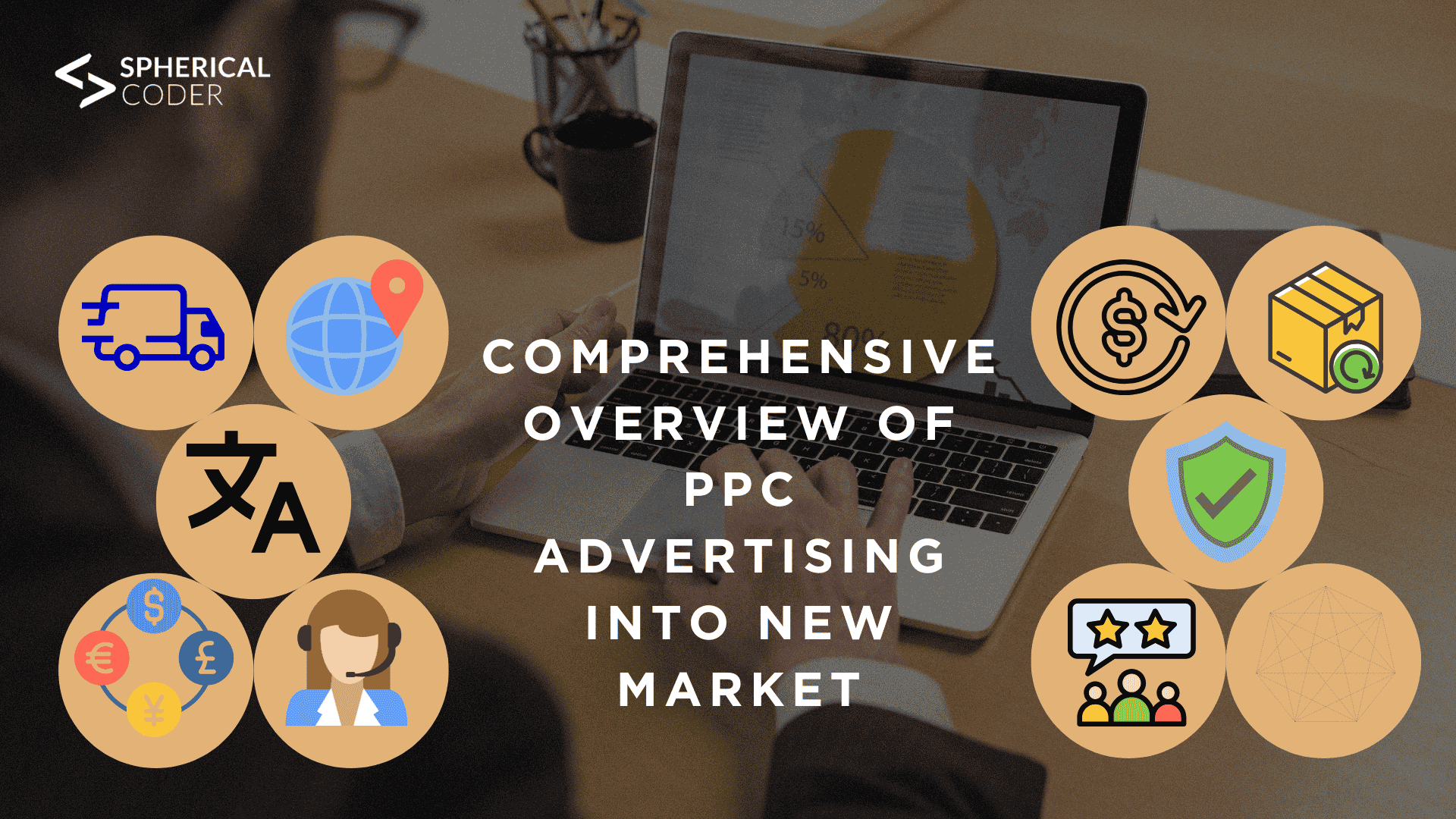
Factors like delivery fees, tariffs, shipping timelines, localized assets, website, currency, contact preferences, customer service, localized support, pricing & return policies, trust signals, local reviews, and social media presence are not as easy to measure as PPC, but are arguably more important than PPC itself.
As per the recent survey, trust emerges as the most critical factor in purchasing decisions when consumers consider buying from a new brand. Elements like star ratings, the quantity of reviews, and the reliability of those reviews are highly valued by consumers. For many brands, PPC would be able to exist in isolation, and even the best-designed, carefully considered, and well-researched campaigns may not succeed when they are activated in a new area.
Brands must take into account the entire digital environment in order to have the best chance of success. This includes how they allocate funds along the funnel, how they show shipping costs on their website, and how to establish trust signals from the first.
Although PPC helps increase awareness and traffic, everything else is more important, and successful brands take into account and address all of these aspects.