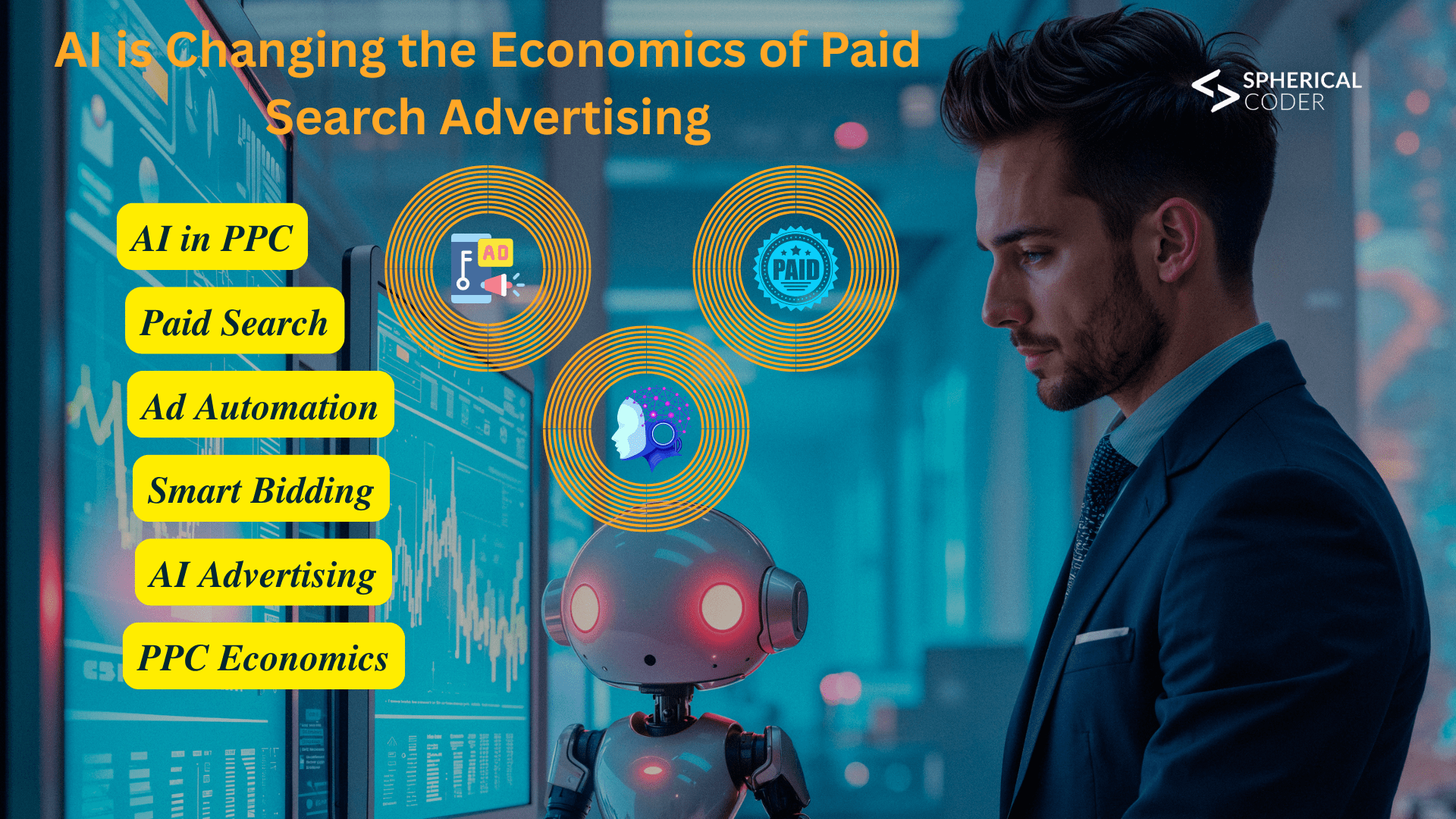
AI is Changing the Economics of Paid Search Advertising
Microsoft Copilot turns conversational intent and first-party data into high-value audiences for more efficient search advertising.
AI is Changing the Economics of Paid Search Advertising
Microsoft Copilot is transforming search advertising by turning everyday conversations into intent-rich signals advertisers can act on.
Drawing from billions of first-part audience insights across Microsoft’s consumer ecosystem- including Bing, Edge, Xbox, LinkedIn, and Activision – Copilot is identifying high-value audiences using deterministic data built from search intent, web activity, and profile information. This enables advertisers to reduce wasted impressions and stretch budgets further.
AI-driven targeting creates a “closed loop” where better engagement drives cost savings. Conversational AI is reshaping how consumers interact with the web, and advertising platforms are racing to translate natural language questions into actionable intent.
Google is utilizing AI for providing answers and leading visitors through multi-step, conversational journeys rather than directing them to a list of blue links. Advertisements are being brought straight into these experiences, sometimes embedded within them and other times above or below AI descriptions.
Google call this a way to “shorten the path from discovery to decision.” And for advertisers, it means budgets are being funnelled into surfaces that look and act very different from the SERPs.
If fewer people click through to websites, advertisers face tighter competition for attention, increasing CPCs, brand safety concerns, and limited transparency into where money is going.
Marketing leaders can’t afford to treat AI Mode as a side experiment, and this is the future of Google search; your ads will either adapt to it or be left behind.
Google’s AI Search Vision and Ad Strategy
AI Overviews was praised by Google executives at Google Marketing Live 2025 as “one of the most successful launches in Search in the past decade,” citing increases in commercial queries in markets like the U.S. and India.
Google explains that ads are pulled seamlessly into these surfaces from Search, Shopping, Performance Max, and App campaigns.
For the user, the ad is “just part of the journey.” For the advertiser, there is no opting out, no special campaign type, and no reporting that shows which impressions or clicks came from AI Mode versus traditional search.
Competition is another driver. Microsoft has already integrated ads into Copilot. OpenAI is experimenting with sponsored results in ChatGPT. Perplexity, the AI search upstart, has raised millions while building advertiser interest in native placements.
Google cannot afford to sit back while others monetize AI-first search. Ads inside AI Mode aren’t an experiment; they’re an existential business necessity.
AI Mode Changing User Behavior
AI mode Matters for Ads. It’s easy to assume AI Mode is just another SERP redesign. But the data suggests it is changing how users behave, and those changes have direct implications for paid ads.
As per Pew Research, when an AI Overview appears:
- Only 8% of visits result in clicks on traditional results, as compared to 15% when no overview is present.
- Only about 1% of visits include clicks on the links embedded inside the AI box.
For advertisers –
- If fewer people leave Google, the competition for the remaining clicks intensifies
- CPCs increase because ad real estate is scarcer
- Campaign budgets have to stretch further to maintain the same level of visibility
- Organic traffic acts as a counterweight to paid spend
- If that counterweight shrinks, paid budgets take on more pressure.
The effects differ by vertical. E-commerce and travel sometimes see AI summaries spark more exploration of products, benefiting Shopping ads.
Insurance and finance have conflicting results. In certain situations, simplified comparisons could boost clicks, but in other situations, they might decrease brand-specific exposure.
The industries most severely impacted are news, health, and publishing; traffic losses are so severe that paid advertisements are frequently the only dependable means of reaching large audiences.
Concerns have been voiced by industry experts without hesitation.
The Future of Paid Search in an AI World
AI search, complicating the three pillars paid search, has relied on for decades:
- Transparency
- Predictable Intent
- Measurable outcomes
Ads are shifting from placements that sit beside results to actions that live inside AI-generated answers.
This isn’t unique to Google
Microsoft has integrated ads into Copilot
OpenAI is piloting sponsored answers in ChatGPT
Amazon and TikTok are testing AI-driven search monetization.
The entire industry is converging on the same model: AI-assisted journeys with ads embedded at critical decision points.
AI ads deliver more qualified clicks and higher efficiency, creating a win for advertisers. In the middle case, some verticals see gains while frustrations over transparency persist.
CPCs inflate significantly, brand safety incidents mount, and ROI weakens, pushing advertisers to question their reliance on Google.
Final Thought: CMOs should treat AI search as a permanent change to the foundation of paid advertising